Tulsi Vivah 2026 marks one of the most enchanting and spiritually significant events in the Vedic calendar, symbolizing the celestial union between the sacred Tulsi plant (an incarnation of Goddess Lakshmi) and Lord Vishnu in his form as the Shaligram stone. This ceremonial marriage signifies the end of the four-month monsoon period known as Chaturmas, during which Lord Vishnu is believed to be in a state of cosmic sleep (Yogic Nidra). As the Lord awakens, the Hindu wedding season officially commences, bringing a wave of auspiciousness and joy to households across the world.
For practitioners of Sanatan Dharma, Tulsi Vivah is not merely a ritualistic reenactment but a profound spiritual exercise that invites divine grace, domestic harmony, and the removal of obstacles. In this comprehensive guide, we will explore the precise timings for Tulsi Vivah 2026, the deep-rooted scriptural legends behind the observance, and a detailed step-by-step Puja Vidhi to help you perform the ceremony with Vedic authenticity. Whether you are a seasoned devotee or a seeker looking to understand the esoteric meaning of this union, this article serves as your definitive resource.
Table of Contents
Tulsi Vivah 2026: Date and Auspicious Muhurat
According to the Hindu lunar calendar, Tulsi Vivah is traditionally observed on the Dwadashi Tithi (12th day) of the Shukla Paksha in the month of Kartik. However, in many traditions, the festivities begin on the day of Devuthana Ekadashi 2026 and culminate on Dwadashi. For the year 2026, the primary day for Tulsi Vivah is Saturday, November 21.
Sourced from Drik Panchang, the following table provides the precise timings (IST) for the observance:
| Event | Date & Time (IST) |
|---|---|
| Tulsi Vivah Date | Saturday, November 21, 2026 |
| Kartik Shukla Dwadashi Begins | 04:31 PM on Nov 20, 2026 |
| Kartik Shukla Dwadashi Ends | 06:41 PM on Nov 21, 2026 |
| Auspicious Puja Time (Pradosh) | 05:25 PM to 07:58 PM (Nov 21) |
It is important to note that while the Tithi begins on the evening of the 20th, the Udaya Tithi (sunrise timing) and the Pradosh Kaal (evening period) of the 21st are considered most auspicious for the marriage rituals. Devotees often prepare the Tulsi altar a day in advance following the Gopashtami 2026 celebrations earlier in the week.
The Spiritual Significance of Tulsi Vivah
The significance of Tulsi Vivah 2026 extends beyond the physical marriage of a plant and a stone. In Vedic philosophy, Tulsi (Ocimum sanctum) is regarded as Vishnu-Priya, the beloved of Vishnu. She represents Bhakti (devotion), while the Shaligram represents the Nirguna (formless) Brahman taking a Saguna (manifest) form. Their union symbolizes the merging of the individual soul with the Supreme Consciousness.
Furthermore, this festival marks the transition of the seasons. As the sun moves further into the southern hemisphere, the cooling energy of the moon becomes more potent. Tulsi, known for its medicinal properties and ability to purify the atmosphere, is worshipped to ensure health and longevity during the winter months. Performing this ritual is said to bestow the merit (Punya) equivalent to performing a Kanyadaan (giving away a daughter in marriage), which is considered the highest form of charity in Hindu culture.
The Legend of Vrinda and Jalandhara
The origins of Tulsi Vivah are found in the Padma Purana. The story revolves around Vrinda, a woman of immense piety and a staunch devotee of Lord Vishnu. She was married to the demon king Jalandhara, who was born from Lord Shiva’s rage. Due to Vrinda’s unwavering chastity and devotion, Jalandhara became invincible, even against the Devas.
To restore cosmic balance, Lord Vishnu took the form of Jalandhara and approached Vrinda. Thinking he was her husband, her vow of chastity was momentarily broken, which led to Jalandhara’s defeat in battle. Upon realizing the deception, Vrinda cursed Lord Vishnu to turn into a stone (Shaligram). Vishnu, moved by her devotion, accepted the curse and granted her a boon: she would manifest as the sacred Tulsi plant, and he would never accept any offering without her leaves. He also promised to marry her in his Shaligram form every year on Kartik Dwadashi.
Sacred Tulsi Shloka and Philosophical Analysis
During the Tulsi Vivah 2026 puja, chanting the Tulsi Prarthana is essential to invoke the energy of the Goddess. This shloka highlights her role as the destroyer of sins and the beloved of the Lord.
देवी त्वं निर्मिता पूर्वमर्चितासि मुनीश्वरैः ।
नमो नमस्ते तुलसी पापं हर हरिप्रिये ॥IAST: devī tvaṃ nirmitā pūrvamarcitāsi munīśvaraiḥ |
namo namaste tulasī pāpaṃ hara haripriye ||
Word-by-Word Meaning (Padachheda & Anvaya)
- Devi: O Goddess!
- Tvam: You.
- Nirmitā: Created/Manifested.
- Pūrvam: In ancient times.
- Arcitā-asi: Have been worshipped.
- Munīśvaraiḥ: By the lords of the sages.
- Namaḥ Namaste: Salutations unto you again and again.
- Tulasi: O Tulsi!
- Pāpaṃ Hara: Destroy my sins.
- Haripriye: O Beloved of Lord Hari (Vishnu).
Philosophical Analysis: This verse establishes Tulsi not just as a botanical entity but as a primordial goddess worshipped by the greatest sages (Munis). By addressing her as Haripriye, the devotee acknowledges that the shortest path to reaching Lord Vishnu is through the grace of His most devoted consort. The plea to “destroy sins” (Papam Hara) refers to the removal of Sanchita Karma, allowing the soul to progress toward liberation.
Step-by-Step Tulsi Vivah Puja Vidhi
Performing the Tulsi Vivah 2026 puja requires a blend of devotion and adherence to traditional steps. The ceremony is conducted like a traditional Hindu wedding.
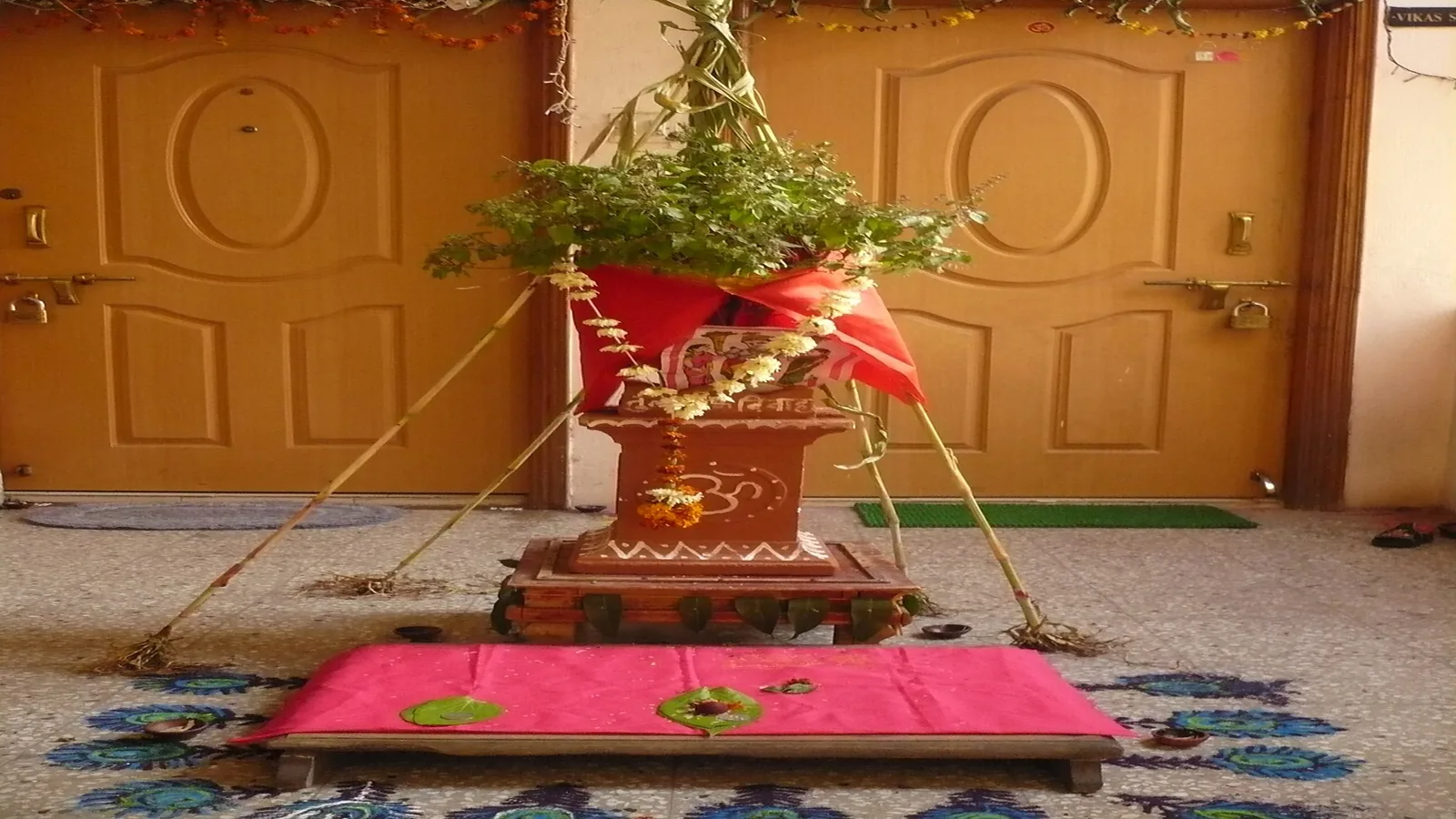
- Preparation of the Altar: Clean the area around the Tulsi pot (Vrindavan). Decorate the pot with vermilion, turmeric, and sandalwood paste. Place a Sugarcane (Ikshu) canopy over the plant, representing the wedding mandap.
- Installing the Groom: Place a Shaligram stone or an idol of Lord Vishnu/Krishna in the pot or on a raised platform next to the Tulsi plant. Dress the Shaligram in yellow cloth (Pitambara).
- The Wedding Thread: Tie a sacred thread (Moli) between the Tulsi plant and the Shaligram stone, symbolizing the bond of marriage.
- Offerings (Shodashopachara): Offer traditional wedding items including Saree, jewelry, and Sindoor (vermilion) to Tulsi Devi. Offer flowers, incense, and a lamp to Lord Vishnu.
- Kanyadaan: The devotee acts as the father of Tulsi, performing the Kanyadaan ritual by pouring holy water and placing Tulsi leaves in the hands of the Lord.
- Mangal Ashtaka: Recite the wedding hymns (Mangal Ashtaka) while showering the “couple” with Akshata (sanctified rice).
- Aarti and Bhog: Conclude the ceremony by performing the Aarti of both Tulsi and Lord Vishnu. Distribute sweets, particularly those made of seasonal fruits like amla (gooseberry) and sweet potato, as Prasad.
Fasting Rules and Observances
To maximize the spiritual benefits of Tulsi Vivah 2026, many devotees observe a partial or full fast. Here are the traditional guidelines:
- The Fast: The fast usually begins at sunrise on Dwadashi and is broken after the evening Vivah ceremony. Some follow the rules of Phalahar (consuming only fruits and milk).
- Dos: Maintain celibacy, speak the truth, and spend the day chanting the “Om Namo Bhagavate Vasudevaya” mantra.
- Don’ts: Avoid the consumption of grains, onions, garlic, and non-vegetarian food. Do not pluck Tulsi leaves on this day; use leaves that have fallen naturally if needed for other rituals.
- Charity: Donating clothes, food, or money to the needy on this day is believed to bring immense prosperity.
Regional Variations in Celebration
While the core essence of Tulsi Vivah 2026 remains the same, different parts of India celebrate it with unique local flavors:
- Maharashtra: Known as Tulasichi Lagna, it is a grand affair where families invite relatives for a feast. Special songs called ‘Mangalashatakas’ are sung with great fervor.
- Gujarat: Devotees often take the Tulsi plant to a nearby Vishnu temple in a procession (Shobha Yatra), accompanied by music and dancing.
- South India: In many temples, the Kalyanotsavam (marriage festival) of Lord Vishnu and Goddess Lakshmi is performed on a grand scale, coinciding with the Tulsi Vivah tithi.
Read More on InVedas
- Kaal Bhairav Jayanti 2026: Date, Ashtami Tithi Timings & Rituals
- Vrishchika Sankranti 2026: Surya Puja & Punya Kaal Muhurat
- Utpanna Ekadashi 2026: Vrat Katha & Fasting Rules
- Understanding the Law of Karma: Sanchita, Prarabdha & Agami
Frequently Asked Questions
When is Tulsi Vivah 2026?
Tulsi Vivah 2026 will be celebrated on Saturday, November 21, 2026, coinciding with the Kartik Shukla Dwadashi Tithi.
Can we perform Tulsi Vivah at home?
Yes, Tulsi Vivah is traditionally performed at home. You need a Tulsi plant, a Shaligram stone (or Vishnu idol), and basic puja samagri to conduct the ceremony in your courtyard or balcony.
Why is sugarcane used in Tulsi Vivah?
Sugarcane (Ikshu) represents the sweetness of life and the harvest season. Four sugarcane stalks are tied together to form a ‘Mandap’ (canopy) over the Tulsi plant for the wedding.
What are the benefits of performing Tulsi Vivah?
Performing this ritual is believed to remove marriage-related obstacles, bring peace to domestic life, and grant the spiritual merit of Kanyadaan. It also invokes the blessings of Goddess Lakshmi for wealth.
Is it mandatory to fast on Tulsi Vivah?
While not mandatory, fasting is highly recommended for those seeking specific spiritual fruits. Many devotees observe a fast until the evening puja is completed.
What is the relationship between Devuthana Ekadashi and Tulsi Vivah?
Devuthana Ekadashi marks the day Lord Vishnu wakes up. Tulsi Vivah is the first auspicious event performed after his awakening, usually occurring on the following day (Dwadashi).
As we approach Tulsi Vivah 2026, let us prepare our hearts and homes to welcome the Divine Couple. By participating in this sacred union, we align ourselves with the cosmic rhythm of Sanatan Dharma, ensuring a life filled with devotion, purity, and spiritual prosperity.
May Tulsi Devi and Lord Shaligram bless your home with eternal happiness.
ॐ शान्तिः शान्तिः शान्तिः ॥
Om Shantiḥ Shantiḥ Shantiḥ ||