Understanding the Tat Tvam Asi meaning opens the gateway to the highest realization within Sanatan philosophy and the sacred wisdom of the Upanishads. Translated famously as “That Thou Art” or “You Are That,” this profound Mahavakya (great saying) bridges the apparent chasm between the individual soul (Atman) and the supreme universal consciousness (Brahman). Rooted deeply in the ancient oral traditions preserved on sanctuaries like InVedas, this teaching challenges our ordinary, conditioned perception of individuality and points directly toward non-dual reality.
For seekers traversing the path of self-inquiry, grasping this concept moves spiritual practice from ritualistic devotion to direct, experiential liberation. As we explore the structural framework, textual context, and practical application of this foundational truth, we will uncover how ancient Vedic seers dissolved the illusion of separation, offering a timeless blueprint for human awakening.
Table of Contents
Origin and Context in the Chandogya Upanishad
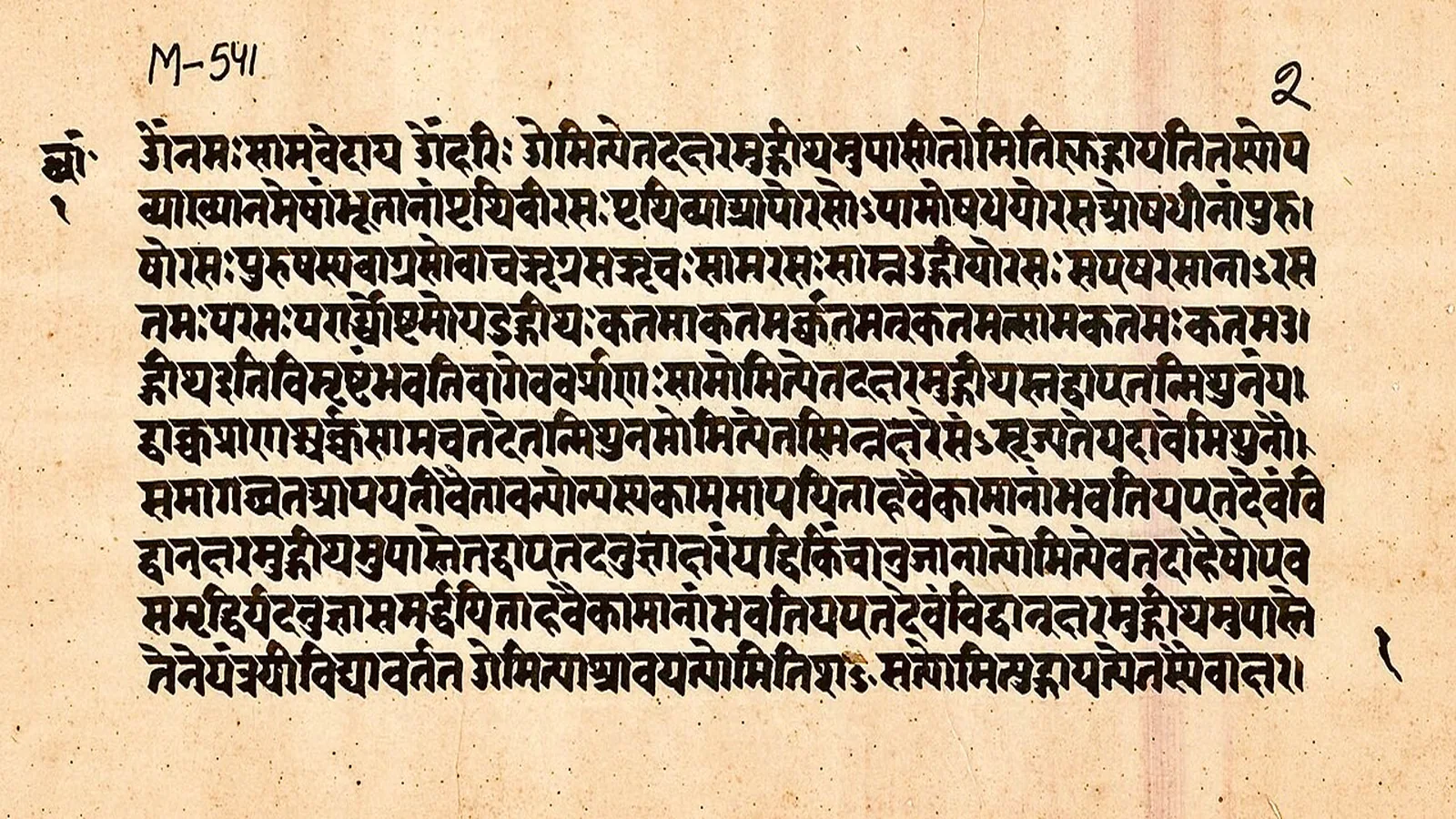
The phrase “Tat Tvam Asi” emerges from the sixth chapter of the Chandogya Upanishad, which belongs to the Sama Veda. This section narrates a deeply intimate dialogue between a wise father and teacher, Uddalaka Aruni, and his proud son, Svetaketu. Svetaketu has returned from twelve years of rigorous Vedic study, assuming he knows everything there is to know about spiritual reality. However, his father tests his wisdom by asking whether he has inquired into that teaching by which what is unheard becomes heard, what is unthought becomes thought, and what is unknown becomes known.
When the bewildered son admits ignorance, Uddalaka Aruni initiates a series of nine profound parables to illustrate how the invisible essence permeates the entire manifest universe. He uses metaphors of rivers merging into the ocean, bees collecting nectar into honey, and salt dissolving completely in water. Just as salt pervades every drop of water without losing its elemental integrity, the divine consciousness saturates every living being. It is within this pedagogical masterclass that the father repeats the refrain nine times: Tat Tvam Asi, Svetaketu—”That Thou Art, O Svetaketu.”
Authentic Sanskrit Shloka & IAST Transliteration
The definitive declaration occurs within the famous dialogue regarding the subtle essence of existence (Sat). The foundational verse capturing this instruction is revered across all traditions of sacred Vedic scripture:
स य एषोऽणिमाऽएतदात्म्यमिदं सर्वं तत्सत्यं स आत्मा श्वेतकेतो इति। भूय आ मा भगवान् विज्ञापयत्विति तथा सोऽवचदिति॥
Sa ya eṣo’ṇimaitadātmyamidaṃ sarvaṃ tatsatyaṃ sa ātmā śvetaketo iti. Bhūya ā mā bhagavān vijñāpayatviti tathā so’vacaditi.
Translation: “That which is the subtle essence—this whole world has that as its Self. That is the Truth. That is the Atman. Thou art that, O Svetaketu.”
This verse establishes that the fundamental building block of the cosmos and the deepest core of human subjective awareness share an identical, indivisible reality.
Word-by-Word Analysis (Padachheda & Anvaya)
To fully appreciate the grammatical and metaphysical architecture of the phrase, a linguistic breakdown of Tat Tvam Asi reveals its precise construction:
| Sanskrit Word | IAST Transliteration | Grammatical Category | Literal Meaning |
|---|---|---|---|
| तत् | Tat | Pronoun (Neuter, Nominative, Singular) | That (Referring to Brahman / Universal Reality) |
| त्वम् | Tvam | Pronoun (Second Person, Nominative, Singular) | Thou / You (Referring to the inner Atman) |
| असि | Asi | Verb (Root As, Present Tense, 2nd Person Singular) | Are (Establishing identity) |
In terms of Anvaya (logical prose order), the statement equates the subject (Tvam / You) directly with the predicate (Tat / That Ultimate Reality) through the copula (Asi / Are). It is not a relationship of likeness or metaphor, but an absolute equation of identity.
Core Philosophical Analysis: Advaita Vedanta Perspective
In the non-dualistic school of Advaita Vedanta, championed by Adi Shankaracharya, Tat Tvam Asi stands as one of the four principal Mahavakyas. Philosophers analyze this sentence through three distinct hermeneutical methods to strip away superficial misunderstandings:
- Bhagatyaga Lakshana (Implication by Rejection): Direct literal association fails because ‘Tat’ implies infinite cosmic power, while ‘Tvam’ implies finite human limitation. Logic requires discarding the contradictory attributes (infinitude vs. finitude, omniscience vs. localized awareness) while retaining the pure consciousness underlying both.
- Ekatva (Absolute Unity): Once extraneous veils of ignorance (Maya) and ego are removed, what remains is pure, undifferentiated awareness. The drop of water and the ocean are recognized as water.
- Apohavada and Direct Realization: The phrase does not create a new state of being; it merely removes the veil of false identity, allowing the seeker to realize, Aham Brahmasmi (I am Brahman).
Practical Modern Application in Daily Life
While rooted in ancient metaphysical inquiry, the practical implication of understanding the Tat Tvam Asi meaning transforms how we navigate contemporary existence. When an individual recognizes that the same divine essence animates every human being, animals, and the natural environment, superficial divisions of race, nationality, and ego begin to dissolve.
Practically, this manifests as radical empathy, ethical integrity, and environmental stewardship. If “That Thou Art” applies to all living entities, harming another is inherently harming oneself. Meditation and self-inquiry based on this Mahavakya guide modern seekers past chronic anxiety and existential isolation, anchoring the mind in an unshakeable inner peace.
Read More on InVedas
- Bhagavad Gita Verses: Most Searched Shlokas 4.7, 2.47 & 11.32 Explained
- Tulsi Vivah 2026: Muhurat, Shaligram Marriage Vidhi & Benefits
- Kaal Bhairav Jayanti 2026: Date, Ashtami Tithi Timings, Puja Vidhi, Legend & Mantras
- Devuthana Ekadashi 2026: Date, Parana & Puja Vidhi
Frequently Asked Questions
What is the exact meaning of Tat Tvam Asi?
Tat Tvam Asi translates literally to “That Thou Art” or “You Are That.” It is a foundational Upanishadic statement declaring the fundamental identity between the individual soul (Atman) and the supreme universal consciousness (Brahman).
Which Upanishad contains the phrase Tat Tvam Asi?
This great saying originates from the Chandogya Upanishad, which is part of the Sama Veda, appearing specifically in the dialogues between the sage Uddalaka Aruni and his son Svetaketu.
Why is Tat Tvam Asi considered a Mahavakya?
It is classified as a Mahavakya (Great Saying) because it encapsulates the ultimate realization of non-dual (Advaita) philosophy, condensing the entire liberating wisdom of the Vedas into a direct, experiential formula.
How does Advaita Vedanta explain Tat Tvam Asi?
Advaita Vedanta explains it by using grammatical implication (Bhagatyaga Lakshana), where contradictory surface attributes of the individual and the universe are discarded to reveal the identical, pure consciousness underlying both.
How can I apply Tat Tvam Asi in my daily life?
You can apply this teaching through mindful self-inquiry, recognizing the divine spark in all living beings, practicing universal compassion, and shedding ego-driven illusions of separation.
ॐ शान्तिः शान्तिः शान्तिः ॥
Om Shantiḥ, Shantiḥ, Shantiḥ.