Samaveda Chanting Music is often described as the primordial heartbeat of the universe, a divine resonance that bridges the gap between the material world and the transcendental realm. As the “Veda of Melodies” (Saman), it represents the musical application of the Rigvedic hymns, transformed into rhythmic vibrations designed to invoke the deities during sacred Yajna rituals. In the year 2026, as the world seeks deeper spiritual grounding, understanding the Samaveda offers a path to inner peace through the science of sound.
In this comprehensive guide, we will explore the intricate structure of Samavedic recitation, the evolution of the seven musical notes (Svaras), and the philosophical concept of Nada Brahma—the realization that the Ultimate Reality is Sound. Whether you are a practitioner of Nada Yoga or a student of Sanatan philosophy, this exploration will reveal how these ancient vibrations continue to shape the spiritual landscape of Bharat and the world.
Table of Contents
Origin and Structure of the Samaveda
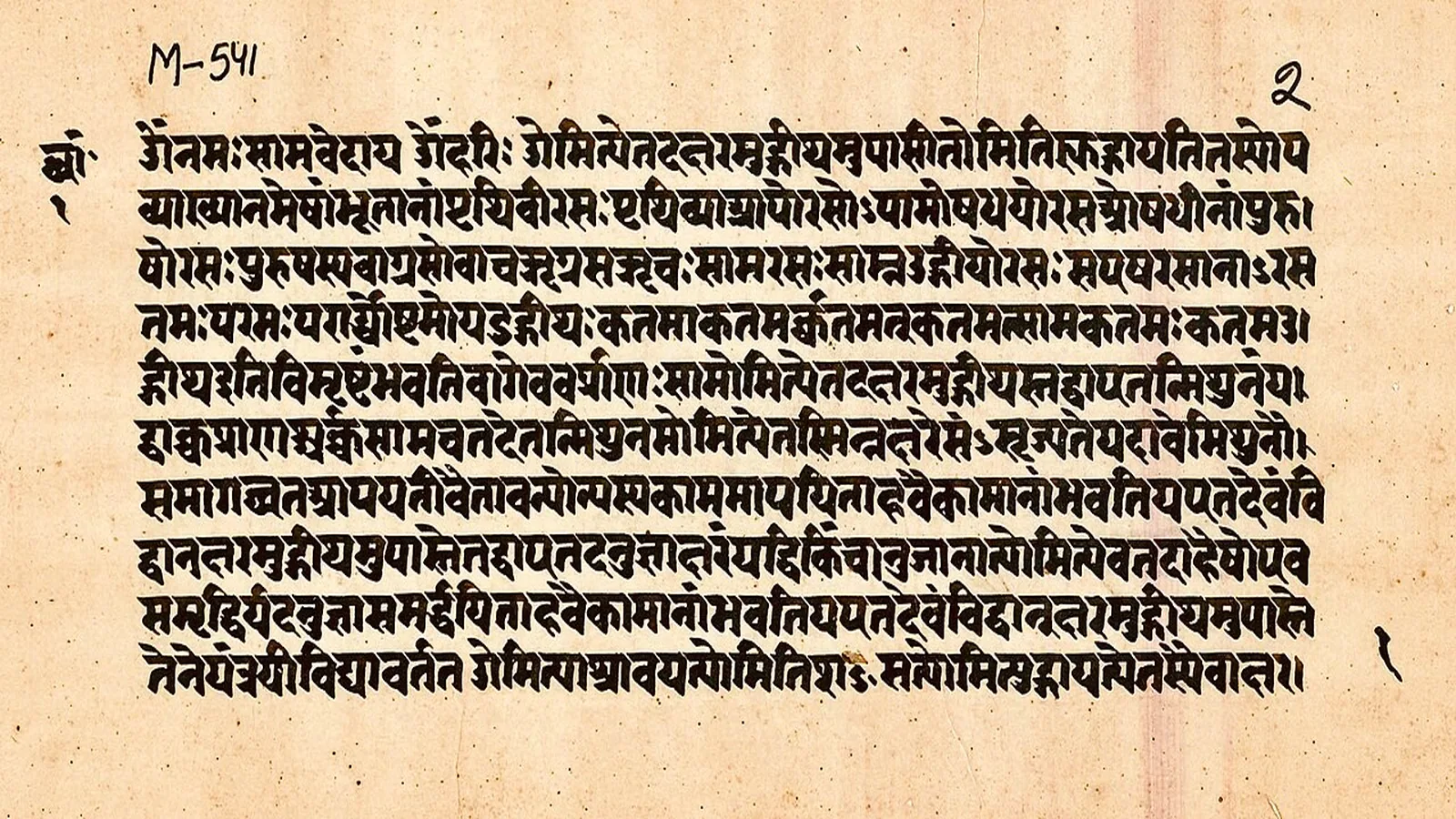
The Samaveda is the third of the four Vedas and is considered the foundation of Indian music and fine arts. While the Rigveda provides the “Rik” (the verse or the word), the Samaveda provides the “Saman” (the melody). Without the melody, the word remains static; through Samaveda Chanting Music, the word becomes a living, breathing force capable of moving the cosmos.
The Samaveda Samhita consists of 1,875 verses, most of which are derived from the Rigveda, specifically from the 8th and 9th Mandalas. It is divided into two main parts:
- Archika: A collection of verse segments (Riks).
- Gana: The songbooks that describe how the verses are to be sung.
The Ganas are further subdivided into Gramageyagana (songs to be sung in villages) and Aranyageyagana (forest songs for meditative practice). This distinction highlights the dual nature of the Veda: its role in social ritual and its role in solitary spiritual realization, much like the profound truths found in the Tat Tvam Asi mahavakya.
Nada Brahma: The Philosophy of Cosmic Vibration
At the heart of Samaveda Chanting Music lies the concept of Nada Brahma. In Vedic philosophy, the universe was not created from matter, but from sound. The Chandogya Upanishad, which belongs to the Samaveda tradition, explains that the essence of all beings is the earth, the essence of earth is water, the essence of water is plants, and the ultimate essence of man is speech—specifically, the Udgitha (Om).
Nada is categorized into two types:
- Ahata Nada: Struck sound, caused by physical contact (like a drum or vocal cords).
- Anahata Nada: Unstruck sound, the celestial vibration that exists eternally without physical cause.
By practicing Samavedic chanting, the seeker moves from the Ahata to the Anahata, aligning their individual consciousness with the cosmic rhythm. This is the same creative energy described in the Hiranyagarbha Sukta, where the golden womb of creation begins with a singular, divine impulse.
The Seven Svaras: The Birth of Indian Classical Music
The Samaveda Chanting Music is the source of the Saptasvara (seven notes) that form the basis of Gandharva Veda (musicology). Unlike the Rigveda, which is chanted using only three accents (Udatta, Anudatta, and Svarita), the Samaveda utilizes a full scale of seven notes.
In the Samavedic tradition, these notes are named differently than the modern Sa-Re-Ga-Ma-Pa-Dha-Ni:
| Vedic Note Name | Modern Svara Equivalent | Description |
|---|---|---|
| Prathama | Ma (Madhyama) | The first or primary note. |
| Dvitiya | Ga (Gandhara) | The second note. |
| Tritiya | Re (Rishabha) | The third note. |
| Chaturtha | Sa (Shadja) | The fourth note. |
| Mandra | Ni (Nishada) | The low note. |
| Atisvarya | Dha (Dhaivata) | The extremely low note. |
| Krushta | Pa (Panchama) | The highest, “shouted” note. |
The descending order of the Samavedic scale (Avarohana) reflects the descent of divine energy into the material plane. This mathematical precision ensures that the vibration produced is exactly tuned to the frequency required for spiritual transformation.
Scriptural Wisdom: Samaveda in the Bhagavad Gita
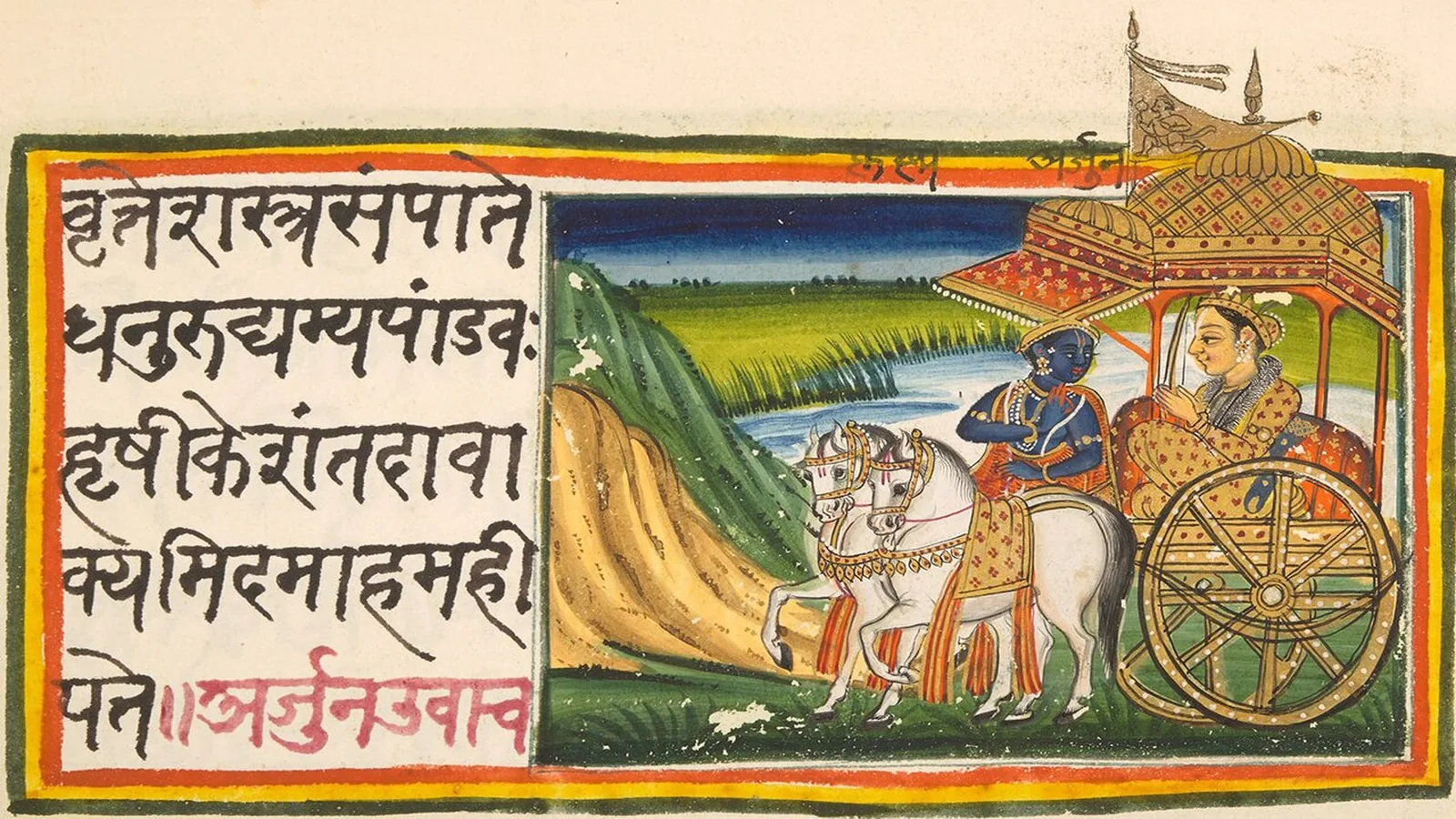
The supreme importance of the Samaveda is validated by Bhagavan Krishna himself in the Bhagavad Gita. When describing His divine opulences (Vibhuti), He identifies Himself with this Veda to signify its musical and spiritual perfection.
वेदानां सामवेदोऽस्मि देवानामस्मि वासवः ।
इन्द्रियाणां मनश्चास्मि भूतानामस्मि चेतना ॥ २२ ॥vedānāṃ sāmavedo’smi devānāmasmi vāsavaḥ |
indriyāṇāṃ manaścāsmi bhūtānāmasmi cetanā || 22 ||
Word-by-Word Meaning (Padachheda & Anvaya):
- Vedānām: Among the Vedas
- Sāmavedaḥ: The Samaveda
- Asmi: I am
- Devānām: Among the Devas (gods)
- Vāsavaḥ: Indra
- Indriyāṇām: Among the senses
- Manaḥ: The mind
- Bhūtānām: Among living beings
- Cetanā: Consciousness
Philosophical Analysis:
By stating “Among the Vedas, I am the Samaveda,” Krishna emphasizes that while the Rigveda provides knowledge, the Samaveda provides the experience of that knowledge through devotion and melody. It is the “soul” of the Vedas. This connection between action and divine essence is further explored in the analysis of Bhagavad Gita 2.47, where the focus remains on the purity of the act itself.
The Mechanics of Samaveda Chanting: Gana and Stobha
Chanting the Samaveda is a highly specialized skill performed by the Udgatar priest. Unlike other forms of recitation, Samaveda Chanting Music involves unique linguistic modifications known as Vikara (alteration), Vishlesha (separation), and Vikarshana (prolongation of vowels).
One of the most fascinating aspects is the use of Stobhas. These are musical interjections or “meaningless” syllables like Hau, Hoy, Hi, Hum, or Ah. While they may not have a literal dictionary meaning, they possess immense esoteric power. They act as “sonic bridges” that sustain the melody and carry the vibration beyond the limitations of human language.
The Five-fold Saman (Panchavidha Saman)
A typical Samavedic chant is structured into five parts:
- Prastava: The introductory solo by the Prastotri.
- Udgitha: The main chant, starting with ‘Om’, sung by the Udgatri.
- Pratihara: The response sung by the Pratihartri.
- Upadrava: A penultimate segment sung by the Udgatri.
- Nidhana: The final chorus or conclusion sung by all three priests.
Practical Application: Healing Through Vedic Sound
In 2026, scientific research into “Cymatics” and “Sound Therapy” is beginning to catch up with the wisdom of the Samaveda. The specific frequencies used in Samaveda Chanting Music are believed to have a profound effect on the human nervous system.
- Stress Reduction: The rhythmic breathing required for Samavedic chanting activates the vagus nerve, inducing a state of deep relaxation.
- Cognitive Clarity: The complex patterns of the Ganas improve memory and focus.
- Spiritual Alignment: Listening to these chants during auspicious times, such as Vaikuntha Chaturdashi 2026, is said to cleanse the subtle body (Sukshma Sharira).
To practice this at home, one does not need to be a Vedic scholar. Simply listening to authentic recordings of Samavedic recitations with a focused mind can create a “sacred space” within the home, harmonizing the environment and the individual.
Closing Shanti Mantra
ॐ आप्यायन्तु ममाङ्गानि वाक्प्राणश्चक्षुः श्रोत्रमथो बलमिन्द्रियाणि च सर्वाणि ।
सर्वं ब्रह्मौपनिषदं माहं ब्रह्म निराकुर्यां मा मा ब्रह्म निराकारोदनिराकरणमस्त्वनिराकरणं मे अस्तु ॥
ॐ शान्तिः शान्तिः शान्तिः ॥oṃ āpyāyantu mamāṅgāni vākprāṇaścakṣuḥ śrotramatho balamindriyāṇi ca sarvāṇi |
sarvaṃ brahmaupaniṣadaṃ māhaṃ brahma nirākuryāṃ mā mā brahma nirākārodanirākaraṇamastvanirākaraṇaṃ me astu ||
oṃ śāntiḥ śāntiḥ śāntiḥ ||
Meaning: May my limbs, speech, breath, eyes, ears, and all my senses become strong. All is the Brahman of the Upanishads. May I never deny Brahman, nor may Brahman deny me. Let there be no denial; let there be peace, peace, peace.
Read More on InVedas
- Bhagavad Gita Verses: Most Searched Shlokas Explained
- Devuthana Ekadashi 2026: Date, Parana & Puja Vidhi
- Kaal Bhairav Jayanti 2026: Legend & Mantras
- Tulsi Vivah 2026: Muhurat & Benefits
Frequently Asked Questions
What is the main difference between Rigveda and Samaveda?
The Rigveda is a collection of hymns (Riks) meant for recitation with three accents, while the Samaveda takes those same hymns and sets them to a musical scale of seven notes for chanting during rituals.
How many notes are used in Samaveda Chanting Music?
Samaveda uses seven notes known as the Saptasvara. These are the ancestors of the modern Sa, Re, Ga, Ma, Pa, Dha, and Ni used in Indian Classical Music.
Why did Lord Krishna say He is the Samaveda?
In the Bhagavad Gita (10.22), Krishna identifies as the Samaveda because it represents the most beautiful, musical, and devotional aspect of the Vedic knowledge, embodying the essence of divine vibration.
What are Stobhas in Samavedic chanting?
Stobhas are musical interjections or syllables like ‘Hau’ or ‘Hum’ that do not have a literal meaning but are essential for the melodic structure and spiritual potency of the chant.
Can anyone listen to Samaveda Chanting Music?
Yes, listening to Samavedic chants is considered highly beneficial for mental peace, stress reduction, and spiritual purification, regardless of one’s background.