Unveiling the Nasadiya Sukta Meaning opens the door to one of the most sublime and intellectually sophisticated cosmological inquiries in human history. Found in the tenth mandala of the ancient Rigveda (RV 10.129), this seven-verse masterpiece confronts the ultimate mystery of existence. Long before modern astrophysics questioned the nature of the singularity, Vedic rishis pondered the pre-creation state where neither being nor non-being existed.
As seekers of Sanatan philosophy, exploring this hymn allows us to appreciate how ancient Indian thought embraced epistemic humility rather than dogmatic certainty. By the end of this comprehensive guide, you will understand the authentic Sanskrit shlokas, word-by-word breakdowns, core philosophical implications, and how this hymn compares to other cosmological texts like those exploring the 14 Lokas in Vedic cosmology.
Table of Contents
1. Origin and Structure of Rigveda 10.129
The Nasadiya Sukta derives its name from its opening word, *na asat* (not non-being). Composed in the Trishtubh meter—a poetic structure consisting of four padas (quarters) with eleven syllables each—it belongs to the final stratum of the Rigveda. This period marks a transition toward abstract, monistic, and metaphysical speculation.
Unlike earlier hymns that praise distinct anthropomorphic deities like Agni or Indra, the Nasadiya Sukta steps beyond ritualistic polytheism into radical ontological inquiry. It questions who truly knows how the universe came to be, suggesting that even the highest celestial gods may not know the absolute origin of the cosmos.
2. Authentic Sanskrit Shlokas & IAST Transliteration
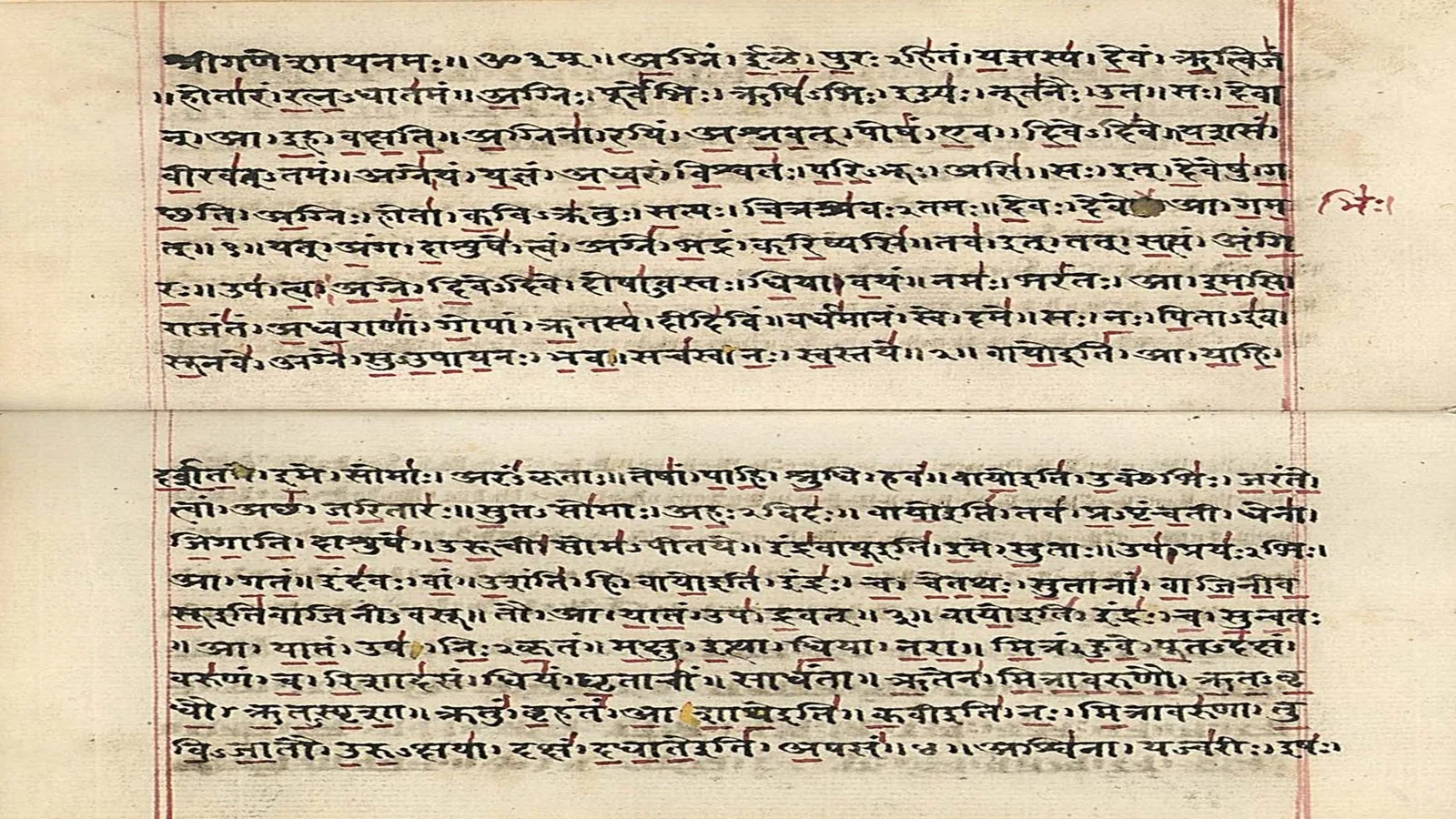
To fully grasp the Nasadiya Sukta meaning, we must examine the original Sanskrit text. Below are the first two verses of this magnificent hymn, presented in Devanagari script alongside their IAST transliteration and English translation.
नास॑दसी॒न्नों सदा॑सीत्तदा॒नीं नासी॒द्रजो॒ नो व्यो॑मा प॒रो यत्।
किमाव॑रीवः॒ कुह॒ कस्य॒ शन्म॒न्न्अम्बु॒ किमा॑सी॒द्गह॑नं गभी॒रम्॥ १॥násad āsīn nó sád āsīt tadānīṁ nāsīd rájo nó vyóma paró yat |
kím āvarīvaḥ kúha kásya śármann àmbú kím āsīd gahanaṁ gabhīrám || 1 ||Translation: Then neither non-being was nor being was; there was no air, nor sky beyond it. What covered in? Where was it? In whose protection? Was there water, deep and unfathomable?
न मृ॒त्युरा॑सी॒दमृतं॒ न तर्हि॒ न रात्ऱ्या॒ अह्ऩ॑ आसीत्प्रके॒तः।
आनी॑दवा॒तं स्व॒धया॒ तदे॒कं तस्मा॑द्धान्य॒ न परः॒ किञ्च॒नास॑॥ २॥ná mṛtyúr āsīd amṛ́taṁ ná tárhi ná rātrtyā́ áhnā āsīt praketáḥ |
ānīd avātáṁ svadhayā́ tád ékaṁ tásmādh hānyá ná paráḥ kiṁcanā́sa || 2 ||Translation: Then neither death nor immortality was there; there was no sign of night or day. That One breathed breathlessly by its own inherent power (svadhayā). Other than that, there nothing else whatsoever was.
3. Word-by-Word Analysis (Padachheda & Anvaya)
Analyzing the grammatical components of the verses deepens our understanding of the Vedic language. The term Nasāt combines *na* (not) and *asat* (non-existence or chaos). Similarly, *sat* denotes existence, order, or manifest reality.
Sanskrit Word
Grammatical Root / Component
Literal Meaning
न (Na)
Particle of negation
Not / Neither
असत् (Asat)
From root *as* (to be) + suffix
Non-being / Unmanifest chaos
सत् (Sat)
Present participle of *as*
Being / Manifest reality
स्वधया (Svadhayā)
Instrumental case of *svadhā*
By its own intrinsic law or power
तद् एकम् (Tat Ekam)
Pronoun + Numeral
That One (The Ultimate Reality)
Through this meticulous vocabulary, the rishi establishes that before creation, the categories of dualistic logic—such as life and death, light and darkness—simply did not apply.
4. Core Philosophical Analysis: The Mystery of Non-Being
The philosophical apex of the Nasadiya Sukta arrives in its final two verses, where the poet introduces profound epistemological doubt regarding cosmic creation:
को अ॒द्धा वेद॒ क इ॒ह प्र वो॑चत्कु॒त आजा॒ता कुत॒ इयॊ सृ॒ष्टिः।
अ॒र्वाग्दे॒वा अ॒स्य वि॒सृजने॒नाथा॒ को वेद॒ यत॒ आबभू॑व॥ ६॥kó addhā veda ká ihá prá vocat kúta ājātā́ kúta iyám sṛṣṭiḥ |
arvā́g devā́ asyá visarjanénāthā́ kó veda yáta ābabhū́va || 6 ||Translation: Who truly knows, and who can here declare it, whence it was born, whence this creation? The gods came later than this world’s creation. Who then knows whence it has arisen?
This admission—that even the devas (gods) emerged after creation and therefore cannot fully comprehend its absolute origin—represents a radical shift. It guards against dogmatism, anchoring Sanatan Dharma in an experiential, inquiry-driven quest for truth rather than rigid decree.
5. Practical Modern Application for Seekers
How does a hymn composed millennia ago apply to our lives today? The Nasadiya Sukta teaches modern individuals the vital spiritual practice of embracing the “unknown.” In an age addicted to immediate answers and intellectual certainty, the Vedic rishi invites us to sit comfortably with mystery.
By recognizing that the ultimate source of reality (*Tat Ekam*) transcends our limited mental constructs, we develop humility. Furthermore, recognizing the breath of the divine within all things connects us deeply to nature, a theme frequently echoed in studies of sacred geography such as the River Sarasvati in Rigveda history.
Read More on InVedas
- Purusha Sukta Rigveda (2026): Meaning & Cosmic Hymn
- Agni Sukta Rigveda (2026): Meaning, Shlokas & Fire Wisdom
- Shanti Path Yajurveda (2026): Sanskrit, Meaning & Peace
- Katha Upanishad Chariot Analogy (2026): Master Your Mind
Frequently Asked Questions
ॐ शान्तिः शान्तिः शान्तिः॥